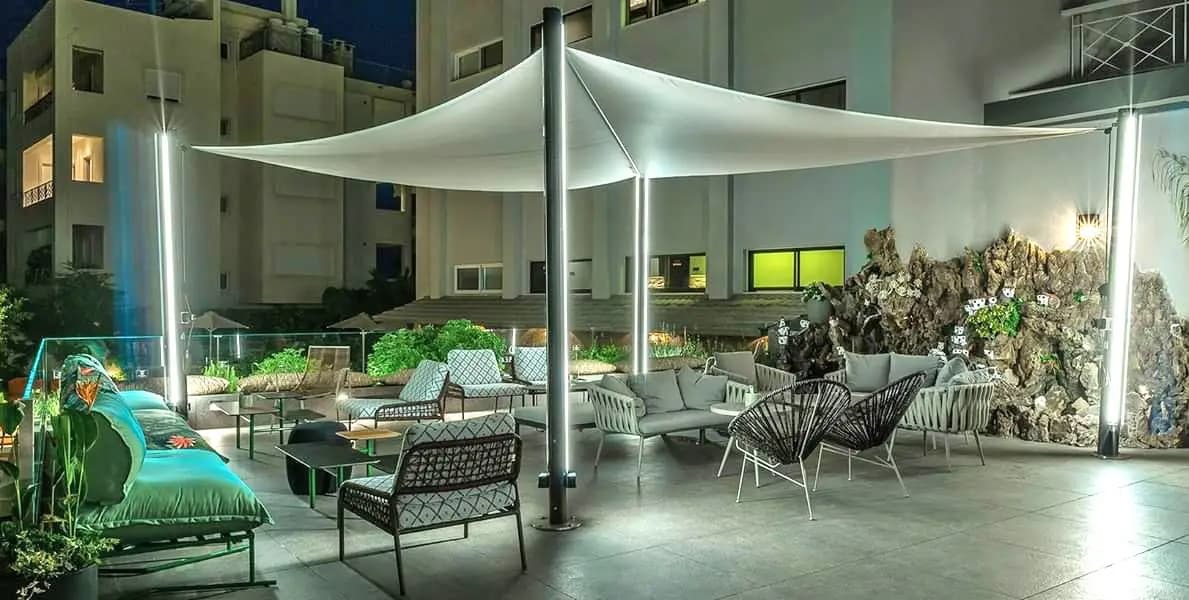
What to Plan Before Adding Tensile Shade Structures to a Commercial Property
July 9, 2026Plan the site layout, structural support, weather exposure, drainage, intended use, permits, and long-term maintenance before selecting tensile shade structures.
Proper planning ensures the shade structure performs safely and complements the property’s architecture. Evaluating environmental conditions, engineering requirements, pedestrian flow, and future operational needs helps prevent costly modifications after installation. A well-planned system delivers reliable shade, improves outdoor usability, and supports the property’s long-term value and appearance.
What should you evaluate before installing a tensile shade structure?
Every commercial property should get a site assessment, before picking a tensile shade structure. Looking at the space you have, sun exposure, wind, drainage, and nearby buildings helps you figure out the right spot and design.
Property owners looking into how to install sail shades often jump straight to the installation steps. But where you put it matters just as much, because a badly placed shade structure can mean less comfort, water pooling where it shouldn’t, or getting in the way of foot traffic. Commercial spaces work best when the shade system is built into the overall design from the start, not added on as an afterthought.
Why is structural support important for commercial shade systems?
Good structural support matters because tensile shade structures are constantly pulling on their anchor points. Buildings, steel posts or concrete footings all need to handle the wind and stress they’ll face over time.
Anyone looking into sail shade installation requirements should know it’s more than just stretching fabric between two posts. Commercial projects need properly engineered attachments that meet local building rules, and hold up reliably for years. Getting the right support system in place from the start helps avoid the fabric wearing out early or surprise repair bills.
How do weather conditions affect shade structure planning?
The weather has a direct effect on the design, direction, and materials you choose for a commercial shade system. Wind direction, how much rain the area gets, and sun exposure all need to be worked out before installation begins.
A lot of businesses researching sail shade installation considerations find that the local climate ends up shaping most of the final design. A properly tensioned structure made from good materials holds up better as the weather changes, and keeps giving customers, staff, and visitors a comfortable outdoor space for most of the year.
Can tensile shade structures improve commercial property value?
Yes. A well-designed shade structure can make a property both more useful and better looking. It creates more usable outdoor space and helps give customers a better experience.
Restaurants can add more outdoor seating, hotels can offer guests something extra, and office campuses can create spaces where people want to gather. At Shelter Outdoor, we help businesses build outdoor spaces that look good and hold up over time. Instead of treating shade as just an add-on, we focus on building spaces that support what the business is trying to do, while fitting in with the rest of the property.
What design features should be considered before choosing a shade structure?
A commercial shade structure should match the style of the property while still doing its job. Shape, fabric color, how high it’s mounted, accessibility, lighting, and the landscaping around it all play into the final result.
Businesses looking into installing sail shades often realize that looks and performance go hand in hand. A well thought-out system gives you good coverage without clashing with the building’s overall look. Planning these details early means fewer changes mid-build and a more consistent finished project.
Should commercial shade projects involve professional planning?
Yes. Professional planning helps figure out what’s structurally needed, what the local rules require and what design options actually work, before anything gets built. This cuts down on delays and makes the finished structure more reliable.
While there’s plenty online about installing sail shades, commercial properties usually need custom engineering, permits, and precise installation work. Working with people who know what they’re doing means the finished structure actually performs the way it should and fits how the property will be used.
What mistakes should commercial property owners avoid?
The most common mistakes are picking the wrong spot, underestimating wind, using weak anchor points, and focusing only on the upfront price instead of what it’ll cost over its lifetime.
Another common issue is owners researching sail shade installation without thinking about future maintenance, or whether they might want to expand later. A shade system that’s planned properly is easier to maintain, performs more consistently, and can grow with the business over time. At Shelter Outdoor, we work with clients to find solutions that fit their property, their goals, and their long-term plans, so the outdoor space keeps working well for years.
Frequently Asked Questions
Does every commercial property need engineered shade structures?
Most commercial projects do better with an engineered design, since larger shade systems need to account for structural loads, local weather, and building codes. Professional engineering improves safety, durability and how long the structure lasts.
How long do commercial tensile shade structures typically last?
That depends on the quality of the materials, the environment, and how well it’s maintained. Good commercial fabric and a properly designed support system usually hold up for many years when inspected and looked after regularly.
Can shade structures be installed on existing commercial properties?
Yes. Existing restaurants, hotels, office campuses, and public spaces can usually fit a tensile shade structure with the right planning. A site assessment tells you the best spot to mount it and whether any structural work is needed first.
Is learning “how to install sail shades” enough for a commercial project?
Learning sail shade installation basics gives you useful background, but commercial installs usually need engineering, permits and structural calculations that go beyond a basic how-to guide. Professional planning helps make sure it holds up over time.
Are tensile shade structures suitable for year-round use?
Many commercial shade systems are built to perform all year, though the right solution depends on your local climate, wind exposure and how it’ll be used. Picking the right materials and structural parts helps it hold up better as the weather changes.
Conclusion
Adding a tensile shade structure to a commercial property starts with good planning, not just the installation itself. Looking at structural support, weather, site layout, design, and long-term performance helps create an outdoor space that works well and looks good.
Businesses that understand “sail shade installation” as part of the bigger picture of commercial planning are in a much better spot to make smart decisions and invest in shade that actually lasts.